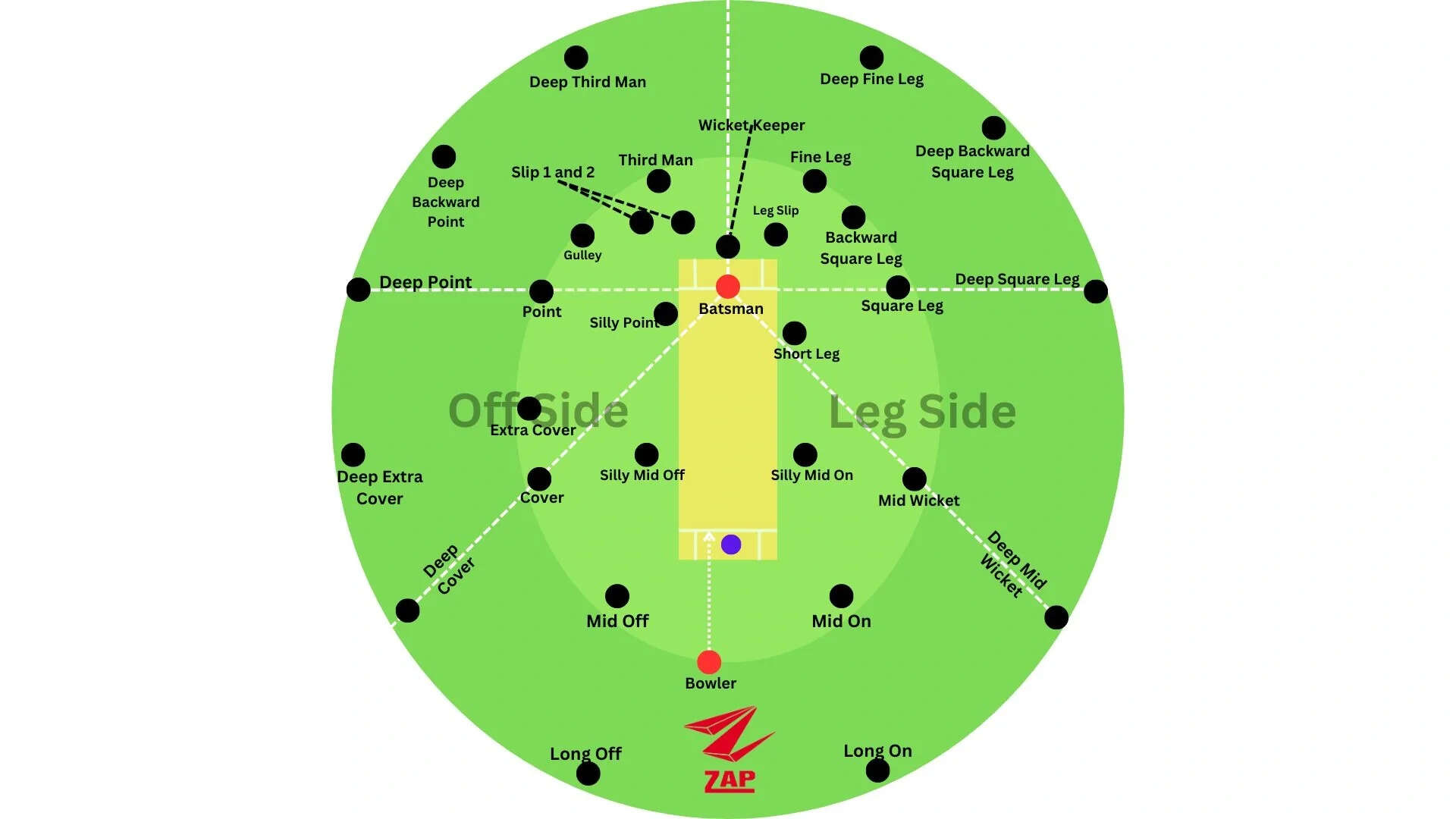
Cricket is a game of strategy, skill, and precision, and fielding positions play a crucial role in determining the outcome of a match. Each fielding position on a cricket field is designed with a specific purpose — to either restrict runs or create wicket-taking opportunities. Captains strategically place fielders based on the type of bowler, batsman, and match situation. Understanding these positions is essential for players and fans alike to appreciate the tactical aspect of the sport.
Also read: Rajkumar Shahabadi Biography, Age, Height, Career, Net Worth In 2025
1. Slip
The slip fielding position is placed beside the wicketkeeper on the off-side, usually to catch edges off fast bowlers. It is one of the most crucial positions in Test matches, where swing and seam movement are common.
2. Gully
The gully fielder stands wider than the slip position and is there to catch balls that fly off the edge of the bat but don’t carry to the slips. This position requires sharp reflexes and excellent catching skills.
3. Point
Located square on the off-side, the point position is ideal for stopping cuts and square drives. It’s a busy fielding spot in limited-overs cricket, demanding quick movement and a strong throwing arm.
4. Cover
Cover is a key position on the off-side, between point and mid-off. Fielders here often stop well-timed drives and need to be agile with quick reactions to save boundaries.

5. Mid-off
Mid-off stands closer to the bowler on the off-side. The fielder here stops straight drives and provides backup to the bowler. It’s also a common place for experienced fielders and captains.
6. Mid-on
Similar to mid-off but on the leg-side, mid-on is positioned to intercept straight and on-drive shots. It’s also crucial for backing up throws from the infield.
7. Midwicket
Midwicket is on the leg-side between mid-on and square leg. It’s a prime run-scoring area for batsmen, so having a sharp fielder here is essential.
8. Square Leg
Square leg is on the leg-side square to the batsman. It’s a strategic position for catching flicks and stopping quick singles. It is often occupied by agile fielders.
9. Fine Leg
Fine leg stands behind the batsman on the leg-side. This position is key for stopping edges and leg glances that travel down the leg side.
10. Third Man
Third man is behind the slips on the off-side, near the boundary. It plays a vital role in restricting runs from edges or late cuts.
Also Read: Top 10 Celebrities with last name Sharma
Conclusion
Every fielding position on a cricket field is important and contributes to the team’s overall strategy. From catching edges in the slips to saving boundaries at third man, each role requires awareness, speed, and sharp reflexes. Captains often adjust these positions based on match dynamics, making field placements one of the most exciting tactical elements in cricket.
About the Author