

Barkha Dutt's Life Story: More Than a Journalist In 2026
Updated: Feb 23, 2026, 02:17 IST
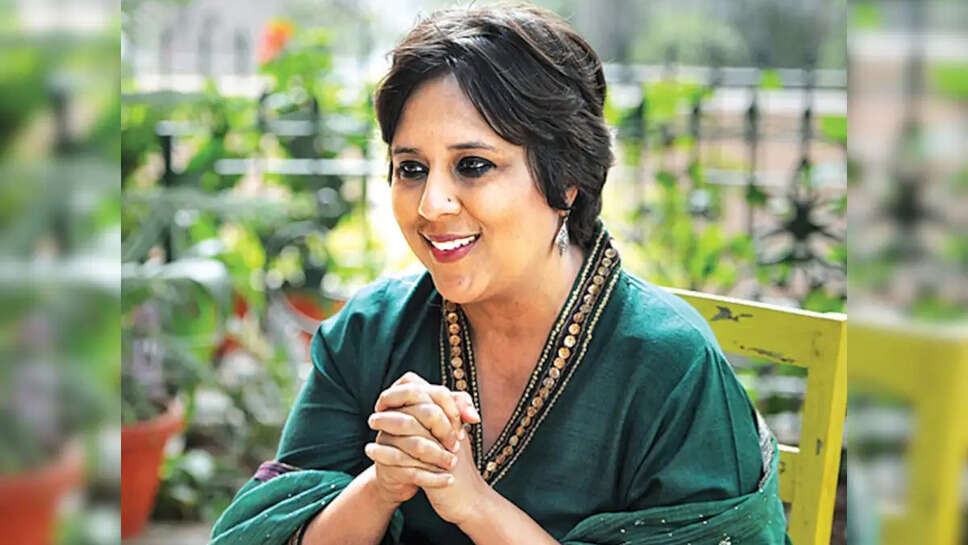
There are not many names in the world of journalism that could be heard as much as Barkha Dutt. Much more than a journalist, she is characterised as a storyteller, a pioneer, a fearlessly honest voice and a media reformist whose efforts over decades have influenced the manner in which news is written and accessed in India and elsewhere in the world.
From Humble Beginnings to Global Newsrooms
Barkha Dutt was born on December 18, 1971, in New Delhi to a family that was based on journalism. Her mother, Prabha Dutt, was a reputed journalist, and her younger sister Bahar was also in the media. Barkha reflected her future career in her academic work: she studied English literature at St. Stephen's College and got a Master of Mass Communication at Jamia Millia Islamia. She would later perfect her art at the Columbia University Graduate School of Journalism in the United States.
She got started in journalism as an early 1990s NDTV employee when she was hired as a fresh young reporter and rose to fame as one of the most recognisable faces on Indian television. Her frontline coverage of the war at Kargil in 1999 is what made her prominent at the national level - a move that would be the defining moment of her life as a fearless reporter.
A Career Marked by Courage and Controversy
Barkha has traveled the world following conflict zones at the Kashmir border, Iraq, the border of Pakistan and South Asia, the location of intense politics. The broadcasting of her own shows such as We The People, The Buck Stops Here, and Democracy Live made them iconic places of popular argument in the early 2000s and the 2010s.
Nevertheless, the path taken by Barkha has not been without criticism. Certain content in her coverage, such as live coverage of the 2008 Mumbai attacks and coverage of the 2002 Gujarat violence early, was subject to criticism regarding journalistic choices. Nevertheless, she has been defending the key principles of investigative journalism and human-focused coverage despite all odds.
MoJo Story & Reinventing Journalism
In the year 2017, Barkha made her own way, having served NDTV long enough, she started MoJo Story, a digital-based news platform that centres on ground-level reporting, multimedia narratives, and human experiences beyond headlines.
Her contribution to the COVID-19 pandemic, particularly her book To Hell and Back: Humans of COVID, demonstrated her style of combining compassion and journalistic excellence. Barkha did not merely give out numbers; she gave intimate narratives of struggle and strength in all the lockdowns and migrant crises in India and even in the face of her own loss.
Legacy, Influence & Recognition
Barkha has received many national and international awards in journalism, such as Padma Shri, the fourth-highest civilian award in India, over the decades. The World Economic Forum has also named her as a Global Leader of Tomorrow, and she remains a columnist in leading world publications.
In addition to the accolades, the legacy left by Barkha Dutt is her unrelenting desire to find the truth, her compassion for voices that are not heard, and her readiness to change along with the landscape of the media. In 2026, she will be not only a journalist but a revolution in the narration of the tales of human struggle, resilience, and society.