

Know About Indian Kingdom Rajputana
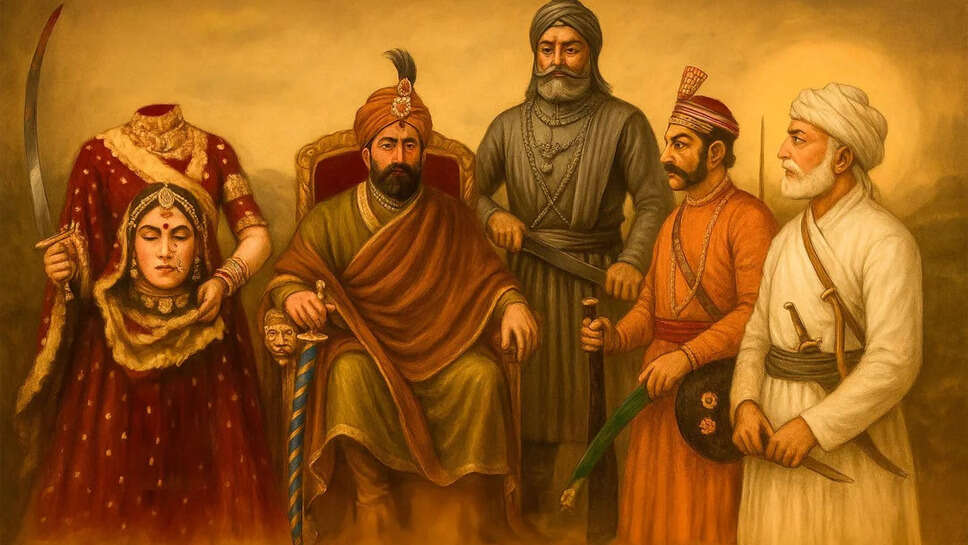
Rajasthan, the royal land and original home of the Rajputs, occupies a veritably peculiar place in the far northwest of India. It has Pakistan as its neighbor on one side, while being encircled by the Indian countries of Gujarat, Madhya Pradesh, Uttar Pradesh, Haryana, and Punjab on the other side. The land is frequently appertained to as the cradle of the Rajputs, the Kshatriya legionnaire clans who inherited the rates of frippery, fidelity, and chivalry. The Rajputs, although being the most significant part of the identity of Rajputana, have also entered colorful other groups, similar as Meenas, Gujjars, Jats, Yadavs, Bhils, Bishnois, and Brahmins. The term “ Rajputana ” translates to “ Land of the tycoons ”( ‘ raj’ meaning king and ‘ put’ meaning son). Jaipur, the present capital of Rajasthan, latterly surfaced as the political and artistic centre.
Early agreements and Artistic Roots
Archaeological traces suggest that Rajputana was inhabited from the foremost phases of Indian civilization. Aboriginal lines similar as the Bhils and Meenas were among the first settlers. latterly, Indo- European settlers – now appertained to as Aryans by chroniclers – arrived from Central Asia during the alternate renaissance BC. The region latterly endured swells of irruptions from Central Asian groups similar as the Sakas, Kidarites, and Kushans, followed by objectification into extensive Indian conglomerates like the Mauryas and Guptas.
Rise of Rajput fiefdoms
What our handbooks do not tell us Why the Rajputs failed miserably in battle for centuries
After the decline of Harshavardhana’s Thaneshwar conglomerate in the seventh century, several Rajput fiefdoms surfaced across northern India. Among the most notable were Mewar, Marwar, Bikaner, Jaipur( Amer), Bundi, Bharatpur, Jaisalmer, Alwar, Tonk, and Kota. Mewar, the area of great resistance to foreign raiders, was also potent in prestige. The stronghold of Chittor, its capital megacity, turned into the symbol of Rajput valor, martyrdom, and martial honour.
The Guhilot dynasty( also the Sisodiya dynasty) was the major player in the Mewar script. Bappa Rawal is regarded as the author of the royal line in the 8th century. The Sisodiyas, still, took upon themselves the heritage of heroic resistance – most specially during the times of Rana Sanga, Maharana Pratap, and latterly Amar Singh. Indeed when numerous Rajput countries accepted tactfulness or nuptial alliances with the Mughals, Mewar continued its struggle for autonomy for the longest period.
The Story of Rajputs From Clans to fiefdoms and citadels
By the nineteenth century, Rajputana comported of multitudinous kingly countries that retained internal independence while admitting British supremacy. After India’s independence in 1947, the kingly countries gradationally inked instruments of accession, and by 1949, they intermingled to form the United State of Rajasthan. On November 1, 1956, the state of Rajasthan was born in the ultramodern world.
Rajputana's Heritage
Rajasthan still represents the Rajputana's eternal spirit. Udaipur, Chittor, Kumbhalgarh, Jaisalmer, and Amber witnessed the lines of the history through their rich architectural patrimonies of stunning palaces, tabernacles, and castles. The people’s ways in the entire area, including carnivals that they celebrate, folk music, apparel, and food, are the vibrant expressions of a culture that has been fed by heroism, devotion, and immolation. thus, it's the heritage of Rajputana that, through its grand armature and literal uproariousness, has been passed down to us, and still, it lives in the collaborative memory of India and the pride of its people.