

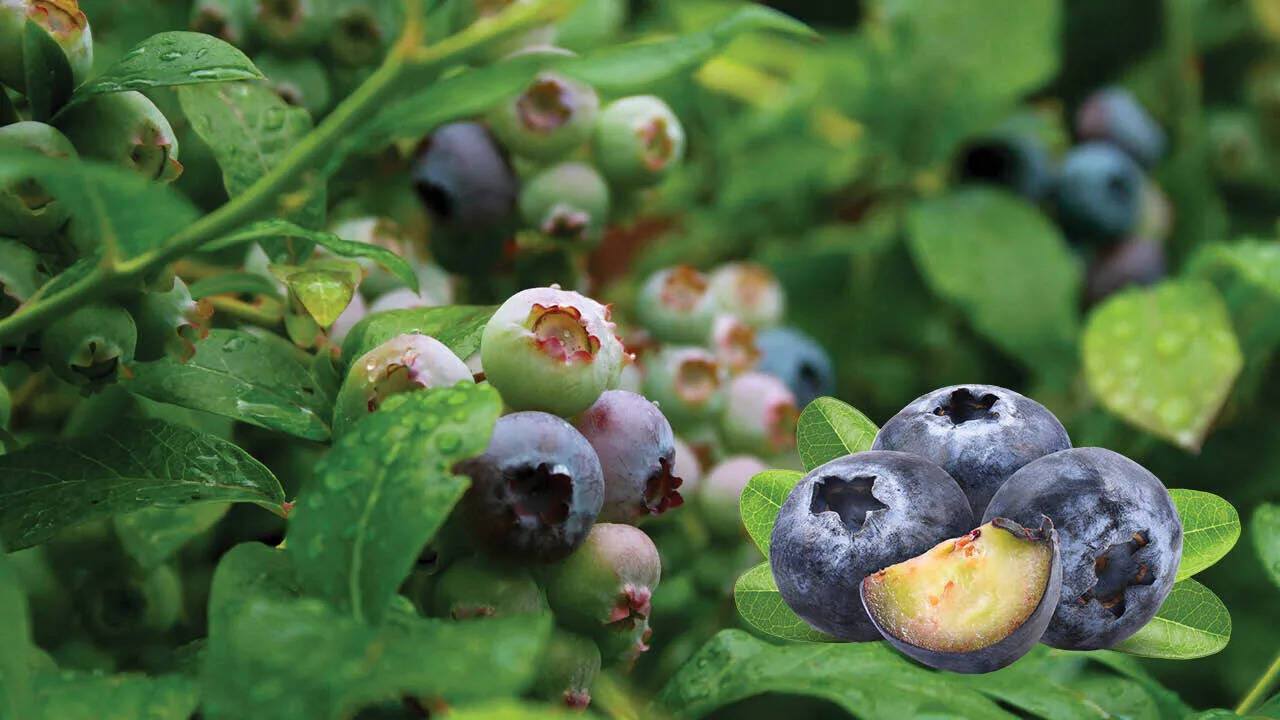
Blueberries, which are put forth as the “superfruit,” are seeing great growth in India because of their high antioxidant content, unique taste, and also the fact that they are in great demand in urban areas. Blueberries’ traditional home is in North America and Europe, but in India, they are a new favorite, which farmers are quick to notice and which they areeager to grow. While blueberry farming does require the right climate, soil, and investment, if done science-based, it can very much pay off. By 2025, we see blueberry farming in India as a very large agri-business opportunity, which is fueled by India’s health-conscious population, which is growing, and also by the increase in imports of fruits.
Climatic and Soil Requirements
Blueberries do well in cool winter and mild summer climates. In India, there are suitable environments in Himachal Pradesh, Uttarakhand, Meghalaya, and sections of Karnataka and Kerala, which are also reported to do well for fruit set. These areas provide the required chill hours.
Temperature Range: The Ideal temperature range is between 15°C and 25 25°C.
Soil Requirement: Blueberry soil should be well-drained, of the sand or loam type, which also has high organic content and is acidic at a pH between 4.5 and 5.5.
Irrigation: Since blueberries have shallow root systems, we require the use of drip irrigation, which in turn maintains even soil moisture.
Farmers in areas of poor soil or bad climate can look into controlled environment farming, which includes greenhouses and polyhouses.
Planting Material and Varieties
Blueberry farming in India is at a very young stage, which is why we put great importance on the quality of planting material.
Popular Varieties: Highberry and Rabbiteye blueberries do well in the Indian climate
Plant Spacing: Generally, we put plants 3 to 4 feet apart in rows that are 8 to 10 feet apart
The outlay on the import of planting material is great, but with proper care, shrubs may produce for 20 to 25 years
Set Up Cost and Investment in 2025
The range of investment in blueberry farming is large, based on the farming method we choose (open field vs. polyhouse) and scale. In 2025, we see that which is what we put out as a rough breakdown for one acre of cultivation:.
Land Preparation and Soil Treatment: ₹1.5 to 2 lakhs
Planting Material (1000–1200 plants per acre): Rs. 4.6 lakhs
Irrigation System (drip, fertigation):. Rs 1 to 1.5 lakhs
Fertilizers, Mulching, and Maintenance: 1 – 2 lakhs annually
Labor and Miscellaneous Costs: 100 thousand Rupees
Total Initial Investment (Open Field): ₹8 – 10 lakhs per acre
Total Initial Investment (Protected Cultivation): 20-25 lakhs per acre
Although there is a high initial outlay, the long-term benefits make this a viable agribusiness.
Yield and Profit Potential
Blue at the third year, when the blueberry plants start to bear fruit, and they reach full production by the sixth year. Per acre, you may get 2- 3 tons of blueberries a year with good management.
Market Price (2025): In urban markets
Gross Income per Acre: ₹25 to 40 lakhs per year (at full maturity).
Net Profit: After expenses are taken out, farmers can earn between 15 and 25 lakhs per acre per year.
Blueberries, which are sold at high prices and also see an increase in their market presence at supermarkets, online stores, and in export, are what make this a very profitable crop.
Marketing Opportunities
Marketing is a key to blueberry farming success. Farmers should look at:.
Direct Sales: Supplying to upscale grocery stores, fruit markets, and organic shops.
Online Platforms: Working with e-commerce grocery players like BigBasket, Blinkit, and Amazon Fresh.
Export Market: Indian blueberries do well in the Middle East and Southeast Asia by virtue of geography.
Value Addition: Processing of blueberries into jams, juices, wines, and dried products is a way to increase income.
Challenges in Blueberry Farming
While on the profit side of things, blueberry farming also brings with it issues:.
Large up-front investment for what is put in, as compared to traditional crops.
In short supply is quality planting material.

Blueberries do well in acidic soil and cooler climates.
Very special High care, especially in irrigation, fertilization, and pest control must be observed.
Farmers need to adopt scientific methods and get in touch with experts to overcome these.
Business Prospects of Blueberry Farming in India
By 2025, an immense growth in blueberry demand in India is envisaged with the growth of the middle class, whichconversely drives health-conscious foods and the trend of exotic fruits. Plus, with the government supporting horticulture, there have been improvements in greenhouse technology, and the private sector is quite keen on blueberry farming. More interestingly, our research institutes are on it searching for local varieties and better cultivation systems-a really good sign that blueberries may soon emerge as a mainstream high-value crop in India.
Conclusion
Blueberry farming in India is a big investment and yet a lucrative trade that requires patience and skilled farmers and as well as the employment of the best modern agricultural tools. While set-up cost may range from Rs 8 lakhs in open farming to Rs 25 lakhs in protected cultivation per acre, the pay off in the long term is great. Also, with the rising domestic demand, export opportunities, and the chance to produce value-added products, we see in 2025 a great opportunity for farmers to diversify their income and play a role in India’s exotic fruit market.
About the Author