


Effective practical tips for daily betting in Baccarat and other popular games
The world of betting is not just chance and excitement. It is a field for strategy, calculation and self-control. The ability to act according to the plan allows you to minimize losses and not turn the game into a chaotic roulette. Especially when it comes to baccarat – a seemingly simple game, but requiring a thoughtful approach.
Daily tips are not magic, but tools of control. They shape behavior, make it conscious, and help build a logical model of decision-making. This is especially important with regular play.
Why baccarat is simple to learn but demands strategic skill
Baccarat has simple rules: bet on the banker, the player, or a tie. But beneath this simplicity lies a mathematical structure where every bet requires careful consideration. Success depends on the ability to calculate, not guess.
Even minimal mistakes can quickly bring the entire pot to zero. That is why it is especially important to apply the basics of betting discipline and analysis of game decisions.
We will not talk about “guaranteed” strategies – there are none. However, we will offer practice-tested working recommendations. They will help to build a stable game and make every game day as effective as possible. This article does not contain theory, but specific techniques. They will be useful for both beginners and experienced players who want to strengthen skills in betting management.
Baccarat without illusions: a daily strategy based on logic
Baccarat is about stability, not risk. The main bet in baccarat is on the pot. Why is that? Because it is mathematically more profitable. It may seem only 1-2% difference, but in the distance it is hundreds and thousands of saved dollars. In baccarat stability is important, not risk.
|
Betting option |
Casino advantage |
Commission |
|
Bank |
~1.06 % |
5 % |
|
Player |
~1.24 % |
0 % |
|
Draw |
~14.4 % |
0 % |
Betting on the pot is the choice of most experienced players. Even with the commission, it remains the safest. Don’t chase a flashy draw – it’s insidious. It is better to focus on what gives a stable result.
When and why you should avoid betting on a tie
Draws in baccarat are rare, and the 8:1 payout creates the illusion of a favorable bet. But betting on a tie is a gamble based on luck, not logic. A rational player avoids it like a minefield. Many beginners fall into the trap of doubling their bets, hoping to catch a streak – like three consecutive banker wins. But each round is independent. A “streak” isn’t a mathematical signal; it’s a gambling illusion. Betting on streaks means trusting in the illusion of repetition. It’s far wiser to stick to proven logic. Here are some signs of an overly risky baccarat playing style:
- regular betting on a draw “for the sake of winning”;
- using progressive systems;
- increasing the bet after a loss;
- trying to “catch up” with the result;
- playing without a predetermined limit.
If you recognize yourself, it’s time to rethink your approach. Taking risks for the sake of emotion is the enemy of a stable strategy.
Your bankroll is your shield: play by financial rules
Play by the rules of money, not emotion. Your bankroll is your main resource. If you lose it, you lose the opportunity to return to the game. Playing on emotions quickly leads to a drawdown. Proper allocation of funds is a strategy. This is what distinguishes an amateur from a professional.
Daily limit principles: maximum loss and maximum gain
Set two amounts for yourself: one as the maximum allowable loss, the other as your desired winnings. Once either limit is reached, the session ends. Self-control isn’t a restriction – it’s a tool for growth. A limit isn’t a reason to panic, but a sign of a player’s maturity. It helps you stay on track no matter the circumstances.
The “60/30/10” method – how to allocate your bankroll within a session
|
Component |
Bankroll share |
Designation |
|
Main bank |
60 % |
Betting on a proven strategy |
|
Reserve Fund |
30 % |
In case of adaptation to the situation |
|
Experimental |
10 % |
Testing new solutions |
This allocation protects against critical drawdowns and gives you flexibility. You can try new things without risking the entire amount. Smart allocation is your insurance. Without it, the strategy is doomed.
What to do if you reach your limit within the first 20 minutes of play
Walk away – even if it’s “on a streak.” That’s the danger zone. You’re not controlling the game; you’re giving in to the moment. The right move is to stop as planned. Players who know when to quit always win more in the long run. Those who lose are the ones who don’t know when to stop.
Three losses in a row is a clear signal to pause. You might be tired, or your strategy might no longer be effective. Tomorrow is another day. Taking a break is a step forward, not backward. Stopping helps conserve your resources. Here are 5 daily rules for managing your betting:
- Never play without a loss limit.
- Divide the pot into at least 3 parts.
- Do not bet the entire pot in one session.
- Stop playing when the daily limit is reached.
- Pause after a series of losses.
These rules are simple, but save the bank time and time again. They are the foundation of your personal financial strategy.
Roulette, blackjack, and craps: adapting the baccarat approach
Having developed a conscious approach to baccarat, it is logical to apply it to other games. But with one caveat: the mechanics and mathematics of each discipline are different. To win more often, you need to understand how the game works. And if in baccarat it is profitable to bet on the pot, then in roulette and blackjack the approach will be completely different. Analysis of rules and probabilities is the first step to adapting a strategy.
Roulette: the Illusion of progressions and the trap of intuition
In European or American roulette, beginners often rely on systems like the Martingale. The principle is simple: you double your bet after each loss to recover all losses with a single win. In practice, however, this often leads to a quick depletion of your bankroll due to table limits and variance. Clinging to the “feeling of the streak” means going against the math. Managing your roulette bets responsibly is more important than chasing a “magic number.” Set predetermined limits instead of trying to catch up with the outcome.
Blackjack: the decision table is your table card
Unlike roulette, blackjack allows you to influence the outcome: you decide whether to take a card, stop, double down. Here it is critical to use the basic strategy table. These are not guesses, but mathematically verified actions based on open cards. Reducing risk in blackjack starts with clearly following the table. This is a basic skill that should become automatic.
Craps: long-term play over instant thrill
Craps scares newcomers with its betting table and rules, but in reality it’s simple: a reasonable player chooses Pass Line and Don’t Pass, avoiding exotics. These are the bets that give the minimum casino advantage and maximum controllability of the game. Trying to play Field or Hardways for the sake of a “fast fan” is not a strategy. It’s a leap into the abyss of volatility. Smart craps bets make the game predictable. Play a long session, not a flashy one.
When to switch games: signs you shouldn’t ignore
Even if you have chosen a competent strategy, there comes a moment when everything “falls apart”: irritation, quick change of bets, loss of focus. Let’s look at some typical examples:
- In baccarat, the player instinctively bets on a tie four times in a row.
- In roulette, they move their chips at the last second because they “have a feeling”.
- In blackjack, they ignore the strategy chart, hoping for a “lucky card”.
It’s time to change your game if you’ve stopped acting logically. Emotions are a wake-up call for strategy. Psychological stability in casinos is as important as knowing the rules. It keeps you on track and on budget.
Practice is everything: daily habits of successful players
What’s the difference between a player who consistently wins and one who loses? Not luck. It’s rituals that are repeated every day. It’s not magic, it’s a system. And it works. Here’s one tool: a betting log. It helps you identify hidden errors in your strategy. A list of the daily actions of successful players:
- Keep a betting log – track not just amounts, but also your emotions.
- Take a 5-minute break after every 10 bets.
- Review the game conditions – including commission rates, rules, and limits.
These actions are simple but create an accumulation effect. Every day is a step towards stability. Play hygiene – that’s what distinguishes a pro from a gambler. Following rituals produces predictable results. Check out the latest news at Channel News Asia to stay up to date if you want to learn more about effective approaches and game analytics in baccarat.
Myths and mistakes that prevent consistent wins
One of the main reasons for losing, even for experienced players, is still following myths. They are passed on in casinos, forums and chat rooms as “folk wisdom”. However, this is self-deception. And relying on luck means ignoring the real principles of the game. Betting psychology plays an important role. It is important to recognize when thinking begins to replace calculation. Popular myths that lead to losing:
- Belief in “hot” and “cold” tables;
- Trying to recover losses in one or two bets;
- Increasing the bet after every loss.
Even one mistake from this list can nullify a winning streak. And if you make them regularly, the drain is inevitable. Debunking casino myths is an obligatory part of any player’s development.
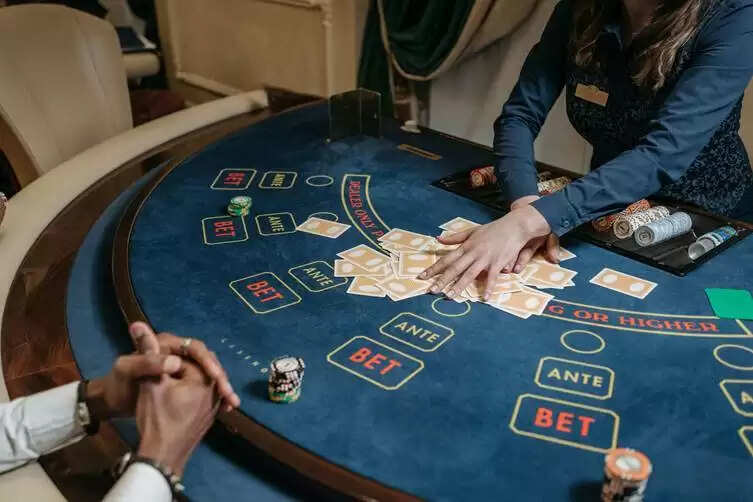
Emotions are the biggest enemy of a consistent strategy
Gambling isn’t just about numbers and cards – it’s about emotions. And if you don’t know how to manage them, no strategy will save you. Your emotional state doesn’t just influence which game you choose, but how you play it. Strategy is cold calculation, while excitement is the fire that can burn that calculation to ashes.
What separates a skilled player from an emotional one?
|
Behavior |
Literate player |
Emotional player |
|
After winning |
Pauses, fixes the result |
Raises bets, wants “more” |
|
After losing |
Analyzes, reduces activity |
Bets more to “win back” |
|
When tired |
Ends the game |
Becomes aggressive |
|
Strategy selection |
By mathematics and logic |
“By feel” |
|
Limit behavior |
Ends the game |
Breaks rule, keeps betting |
The difference is in the mindset. It is the mindset that makes one player minuscule and another disciplined and stable. Game self-regulation is not an abstraction, but a skill that can be developed.
Internet betting systems: why they’re risky
There are many systems that appear well thought out, logical, and “tested.” However, they often overlook the most important factors – limited bankroll and casino limits. Probability has no memory. Financial vulnerability in betting is exactly what makes all aggressive systems risky. Sometimes, it’s better not to start at all. Knowing when not to gamble is more important than knowing how to bet, because even the strongest system can fail if you’re not in the right mindset. Here are 5 signs it’s time to take a break:
- You feel angry after losing and irritated.
- You want to win immediately after a loss.
- You feel tired or sleepy.
If at least one point appears, stop. Play is not about running away from emotions, but about working with them. Game awareness and psychological hygiene are the basis for stable growth.
From random tips to a systematic winning habit
Tips rarely work well when seen as just “helpful notes.” But when you turn them into a system, and especially a habit, they become a game changer. Not just in theory, but in practice. Three simple actions before each session can make all the difference:
- Open your logbook and record your starting bankroll.
- Write down your limits: how much you’re willing to lose and how much you want to win.
- Ask yourself honestly: Am I in a focused, relaxed state?
It takes two minutes, but it puts your thinking in a strategic mode. Formation of game rituals is a step towards a professional approach. They protect you from emotion and keep you focused.
One of the most powerful techniques is summarizing. At the end of the week, don’t ask yourself: “How much did I win?”. Also ask:
- How many days I followed the system;
- How many times I exceeded my limits;
- How many times I gave in to impulse bets.
These metrics will show whether you’re making progress or stagnating. Financial results come from discipline, not luck. Winning happens when everything is under control; everything else is just temporary luck.
Building discipline: from one day to five consecutive days
You can’t become a perfect player overnight. But you can set a goal: play one day following all the rules. Then two days. Then three. If you make a mistake or slip up, don’t beat yourself up – just get back on track. In 2-3 weeks, you’ll be surprised at how much easier it becomes to avoid unfavorable bets and stay calm under pressure.
This works on the principle of accumulation. Each week, your skill in making conscious decisions improves, and the urge to “make an exception” decreases. Discipline doesn’t restrict freedom – it creates it. You start winning more often, not by chance, but through the habit of thoughtful play.
Everyday tips are more effective than one-size-fits-all strategies because they’re tailored to real gameplay. Adapt these techniques to your own style, habits, and mindset. That way, you’ll win more consistently and play longer. Those who know when to stop already win more often than most.
About the Author