

Know About Symmetry in Architecture

Symmetry has been a fundamental element in architecture, which has shaped the look, feel, and function of buildings. It is the balance in the arrangement of elements on either side of an axithatc,h in tu, rn brings order and peace. From ancient temples to present-day structures, symmetry has played in the development of architectural styles through the ages, which is a very basic and important design principle to study.
Understanding the Concept of Symmetry
In architecture, re that is symmetric, the design of one half mirrors the other. We see this in the arrangement of facades, the placement of columns, windows, and doors, and also in the interior plan. Also,o they use it to achieve visual stability, ty which in turn makes a building very pleasing and well organized. At the same time, symmetry plays a role in guiding the eye of the viewer, which in large part gives a balanced and smooth flow.
Types of Symmetry in Architectural Design
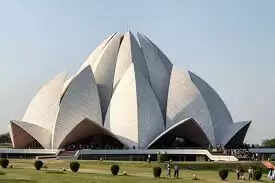
The main type is that of bilateral symmetry, which is when structures are equal on both sides of a dividing plane that runs through them. Many historical monuments, palaces, and government buildings display this feature for the very formal and grand effect it produces. Rotational symmetry is also a thing where elements are repeated around a central point. We see this in domes, circular courtyards, and towers. Translational symmetry, although not as easy to see, includes the repetition of elements in a linear fashion, like a series of arches or pillars.
Importance of Symmetry in Architecture
Symmetry plays a large role in architecture. In terms of look and feel, it improves the appeal of a structure, which results in a more elegant and timeless appearance. Also,o it brings in practical elements, which, with a simple layout and better distribution of load, are easy to achieve. Psychologically, symmetry has a calming effect, which is a key reason for its use in places like religious institutions, museums, and memorials. Also, it makes spaces easier to navigate, which in turn gives people an intuitive feel of the space’s layout.
Symmetry in Modern Architecture
While in the past symmetry was a hallmark of classical architecture, modern architects use it in a thought-provoking way, often mixing it with asymmetry as a means to create new forms of design. In today’s architecture, we still see symmetrical elements present, especially in facades and interiors. What we also see is the use of modern materials and innovative technologies, which are used in the process. Today aims to create a sense of balance that isn’t necessarily about mirror-image symmetry, but that which gives a look of stability within a dynamic structure.
Conclusion
Symmetry is a powerful element in architecture, which does and does not fit into the creative brief of the designer. It is also a fact that plays into how we, designers, think of form balance and harmony. We see through symmetry the care and thought that went into the design of the structures that we see every day.