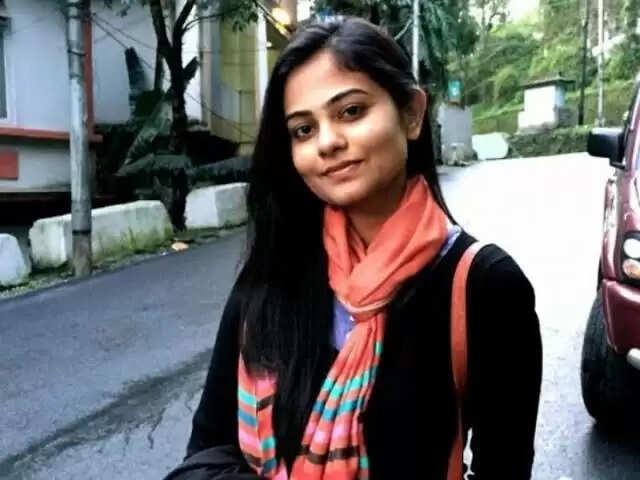
Artika Shukla gained recognition in the media when she achieved an impressive score of 106 marks in the IAS exam. Hailing from Varanasi, India, Artika grew up in a family with a doctor father and a housewife mother. She had two elder brothers who had also cleared the UPSC exams. Artika attended St. John’s School, where her diligence and intelligence shone through. Throughout her academic journey, she consistently performed well, securing 95% marks in class 10 and 98% marks in class 12, where she topped the overall rankings. During her studies, she even interned at Lok Nayak Hospital.
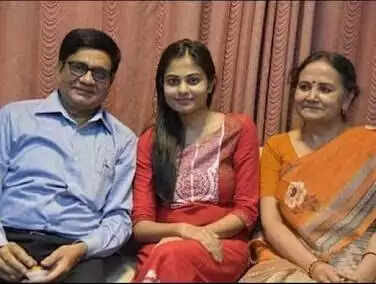
Inspired by her brother’s success in cracking the UPSC civil services examination, Artika embarked on her own journey to prepare for the exam. Her dedication and strategic approach paid off, leading to her remarkable achievement.
To prepare for the UPSC exam, Artika followed a specific strategy and booklist. In ancient history, she studied the NCERT books from classes 9 to 12 for basic knowledge. Similarly, for medieval history, she referred to the NCERT books for an understanding of the subject. However, for modern history, especially the freedom struggle, she delved deeper, studying books by Bipin Chandra, Spectrum, and NCERT’s “Modern India,” making thorough notes along the way.
Artika approached the culture and society topic by studying Nitin Singhania’s book, along with NIOS materials, Vision IAS materials, and NCERT books on art. For polity, she relied on the book by Laxmikant and also solved test series from both Vision IAS and Insights. In economics, she used Srirams booklet, NCERT books, and extensively studied the Economic Survey of India to grasp crucial concepts. Artika didn’t follow a specific book for science but stayed updated by reading newspapers and making notes on new innovations. Shankar IAS was her go-to resource for environment, and she also solved test papers from Vision IAS. Geography was covered using NCERT books for physical, class 11th and 12th books for India, and videos from Mrunal on world geography, along with note-taking.
To stay updated on national and international current affairs, Artika relied on The Hindu newspaper, Gktoday, and solved test papers from Vision IAS and Insights. She utilized previous year’s question papers for mathematics, reasoning, comprehension, and decision-making. In the essay section, Artika prepared notes on current affairs from newspapers and news websites, using quotes from important personalities like Gandhi, Netaji, and Luther King to begin her essay.
Artika faced challenges in the culture subject but managed it by utilizing free study material from the government-based website NIOS, along with NCERT and Vision IAS materials. For Indian history, she solely relied on Bipin Chandra’s book, and for world history, she referred to Vision IAS notes. She followed “India After Gandhi” by Ramachandra Guha for post-independence India. Resource distribution was covered using NCERT and Vision IAS notes.
Regarding disaster management, she made her own notes from the internet and referred to ARC materials. For topics like Indian constitution, devolution, dispute redressal, and comparing constitutions with the world, Artika relied on Laxmikant for basics, newspaper articles, insights secure initiative, Vision IAS current affairs material, and PRS reports and documents from various ministries.
In the General Studies (Mains) paper 3, Artika focused on Indian economy, resource mobilization, inclusive growth, and budgeting by studying the Economic Survey of India, budget features, daily newspapers, and insights secure. She used Vision materials, The Hindu newspaper, and online articles for agro produce, e-technology, farm subsidies, MSP, PDS, buffer, food security, technical missions, animal rearing economics, food processing, storage, and marketing. For land reforms, she referred to three chapters in Bipan Chandra’s book. Liberalization was covered using the 12th NCERT Indian economy book.
Artika didn’t worry much about investment models, as current affairs would cover that aspect. She relied on ARC materials for disaster management and used newspaper articles and internet resources for topics like cyber security, money laundering, border management, organized crime, and terrorism.
In General Studies 4, which focuses on ethics, interface, family, and society, Artika emphasized the importance of developing one’s own viewpoint based on thorough newspaper reading and balanced thoughts. She advised answering questions with examples and personal insights.
As a government employee, Artika’s salary was determined by the 11th pay matrix. Her basic pay was Rs. 67,700, with additional allowances such as HRA (Rs. 16,248), DA (Rs. 11,509), TA (Rs. 3,600), and DA on TA (Rs. 612). After deductions for NPS and CGEGIS, her net salary amounted to Rs. 91,718.
Artika Shukla is married to Jasmeet Singh Sandhu, an IAS officer in Rajasthan. Jasmeet is posted in Jaipur, Rajasthan, and Artika, under the provisions of sub-rule 2 of rule 5 of the 1954 IAS Cadre Rules, was transferred to the Rajasthan cadre as an APO (Army Post Officer) through her marriage. They tied the knot on December 8, 2017.
About the Author